
Water on St Helena
We capture, store, treat and distribute the island's drinking water, and we publish the test results that show it is safe.
WaterNormal
Water supply is operating normally.
St Helena's water comes entirely from rainfall captured on the island. There is no aquifer to fall back on and nowhere to import from, so storage and leakage control matter more here than almost anywhere in the UK.
From catchment to tap
- Capture. Rainfall is collected from upland catchments and streams.
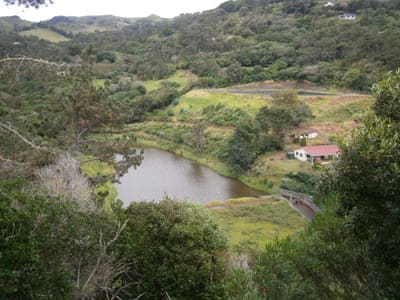
- Storage. Raw water is held in reservoirs, which buffer the gap between wet and dry periods. Storage is the single biggest constraint on supply in a dry year.
- Treatment. Water is filtered and disinfected at treatment works to make it safe to drink.
- Distribution. Treated water is pumped and gravity-fed through the network to properties across the island.
Water quality
We test treated water routinely for microbiological and chemical parameters, and publish the results rather than summarising them. Quarterly laboratory reports and the annual water quality report are in the documents library.
If your water is discoloured, run the cold tap until it clears. Discolouration after mains work is usually disturbed sediment rather than contamination, but if it persists, tastes or smells wrong, tell us.
Untreated water
Where treated water is not yet available, we supply untreated water to the community. Untreated water must be sterilised before you drink it, either by boiling it for at least 2 minutes or with sterilising tablets, which you can collect from our office.
Leaks and bursts
A leak on the network is our responsibility and we want to know about it. Water lost from a burst main is water the whole island paid to capture and treat.
A leak on your side of the meter is the property owner's responsibility, and you will be charged for the water that passes through the meter. To check:
- Turn off everything in the property that uses water.
- Look at the meter.
- If it is still turning, water is going somewhere it should not be.
Undetected leaks are the most common reason for an unexpectedly large bill.
Where our responsibility ends
We maintain the network up to and including your meter. Pipework beyond the meter, including your stopcock and internal plumbing, belongs to the property owner.
Saving water
Because storage is finite and rainfall is not guaranteed, saving water is not only about your bill; it protects supply for everyone in a dry spell.
- Fix dripping taps promptly. A steady drip wastes a surprising volume over a month.
- Take shorter showers, and avoid running taps while brushing teeth or washing up.
- Water the garden early or late so less evaporates.
- Use full loads in washing machines and dishwashers.
- Check your meter monthly so a hidden leak is caught in weeks rather than quarters.
Submit your reading between the 1st and 7th of each month: it keeps your bill accurate and helps us spot leaks early.